Cocktails and coups: the view from a luxury hotel in Kabul
This article has been kindly reproduced with permission from The Economist and was published on 16 October 2025.
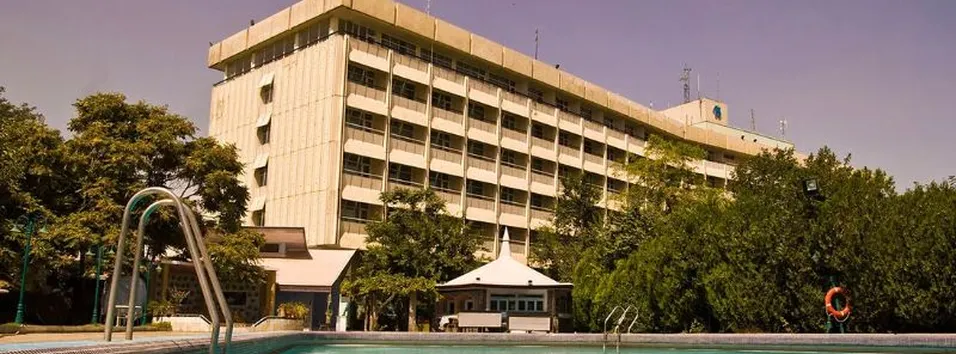
MANY JOURNALISTS believe that you should talk to taxi drivers if you want to get the measure of a place. But Lyse Doucet, the BBC’s chief international correspondent, reckons it is better to speak to the people who work in hotels. In her new book she traces the tumultuous history of Afghanistan as it has been experienced at the Hotel InterContinental Kabul.
The “InterCon”—the first luxury hotel in Afghanistan—opened in 1969. It was a symbol of the modernising instincts of the king, Mohammed Zahir Shah, and of Kabul as the “Paris of Central Asia”. Women paraded poolside in bikinis. People sipped drinks in the Nuristan Cocktail Lounge. The hotel hosted a catwalk show by Pierre Balmain, a French couturier, in 1971.
The building soon became an emblem of solidity amid political change. The king was ousted in 1973. When presidents were overthrown—three were murdered in 1978-79—the “staff got their hammers and nails out again. Portraits came down; new ones went up.” The hotel remained standing amid these bloody coups as well as civil wars, occupations and Islamist rule.
All sorts of people have strutted through its gilded lobby: leaders, foreign dignitaries, spooks, mujahideen and Taliban fighters. Ms Doucet focuses on the Afghans who keep the lights on. There is Abida, the hotel’s first female chef, known for her ashak (pasta dumplings). There is Hazrat, a housekeeper whose job, when “freshening up rooms”, is also to try “to air them of anxiety”. And there is Mohammad Aqa, a waiter-cum-manager.
The InterCon strived to be a “business-as-usual bubble”. When it seemed like Mohammad Musa Shafiq, the prime minister, might be cracking down on alcohol in 1973, “liquor glasses kept being polished”. As the Soviets invaded on Christmas Eve 1979, people danced to “Hotel California” in the Pamir Supper Club on the top floor.
Inevitably that bubble sometimes burst. In 1978, when some 2,000 Afghans were killed in the Saur revolution, the staff stepped over bodies and “rivulets of red blood” on their way to work. In 1981, when delegates from the Afro-Asian People’s Solidarity Organisation, an NGO, were due at the InterCon, the mujahideen fired rockets into the nearby hills. In 1993, during the second civil war, Ahmad Shah Massoud, a warlord, attacked the district of Afshar. He positioned his tanks next to the InterCon’s pool. The hotel has also been the site of two terrorist attacks, in 2011 and 2018.
Ms Doucet begins and ends her story in 2021, with the return of the Taliban. The staff knew what to do: they rolled out prayer mats, turned music off and hid alcohol. The men made a note to grow beards. The women were told not to come back.
“The Finest Hotel in Kabul” is written like a novel. This is both its strength and its weakness. Ms Doucet is a humane narrator with an eye for detail; she conveys her characters’ suffering and resilience. (Abida, for instance, was laid off shortly before the Taliban returned. She missed her work and worried about money.) At times, however, you wonder how much is fact and how much is inference—and her habit of referring to herself in the third person gets rather irritating.
Nonetheless, it is fascinating to read how the InterCon has been buffeted by history. Many of the people Ms Doucet describes no longer work there. Yet the message of her book is ultimately salutary. Regimes can outstay their welcome, but not for ever: at the InterCon, “Politics, like hotel guests, checked in and out.”
The articles may contain material provided by third parties derived from sources believed to be accurate at its issue date. While such material is published with necessary permission, the Westpac Group accepts no responsibility for the accuracy or completeness of, nor does it endorse any such third-party material. To the maximum extent permitted by law, we intend by this notice to exclude liability for third-party material. Further, the information provided does not take into account your personal objectives, financial situation or needs and so you should consider its appropriateness, having regard to your personal objectives, financial situation and needs before acting on it.